By Antti Innanen, lawyer, non-fiction author, and entrepreneur
What is the best AI model on the market?
This is a question we hear very often. What is the best AI model for an ordinary user? What is the best AI model for legal work?
Let’s tell you, then, and reveal the secret. Finally! But first, a little background.
Simplifying roughly, there are two kinds of tools: general tools such as ChatGPT, Claude, and Gemini, and domain-specific tools, for example Harvey in law, Cursor in coding, Elicit and Consensus in science, and Einstein in CRM.
General tools are usually so-called foundation models, while domain-specific tools are applications — wrappers — built on top of them. Domain-specific tools use foundation models as their engines.
Different tools have different models within them. Some are suited to fast tasks, others “think” for a long time. Choosing the right model can produce very different results.
We have noticed a clear trend lately. Many domain-specific tools do not use just one tool or model. Harvey, for example, uses Gemini, Claude, and GPT, and all their variations, in legal work. Cursor allows the use of several different models.
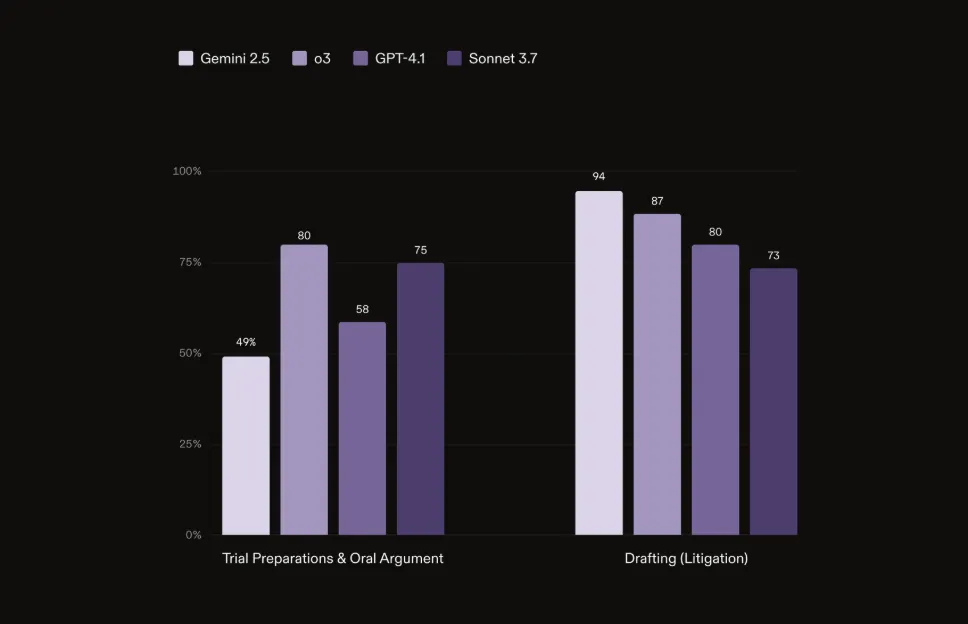
Why? Because there is no single best model for any given job.
In legal work, for example, GPT is best at planning, Claude at creative writing, and Gemini at drafting contract text. If you need more careful background research, the Deep Research feature is best. For fast tasks, something else will be better again.
You could describe this idea as a “multi strategy”. The best domain-specific tools use all the models and help the user choose between them.
The other interesting thing is to look at how really good AI users actually use these tools.
Everyone who is genuinely good has essentially every tool in use. Always at least two, in any case.
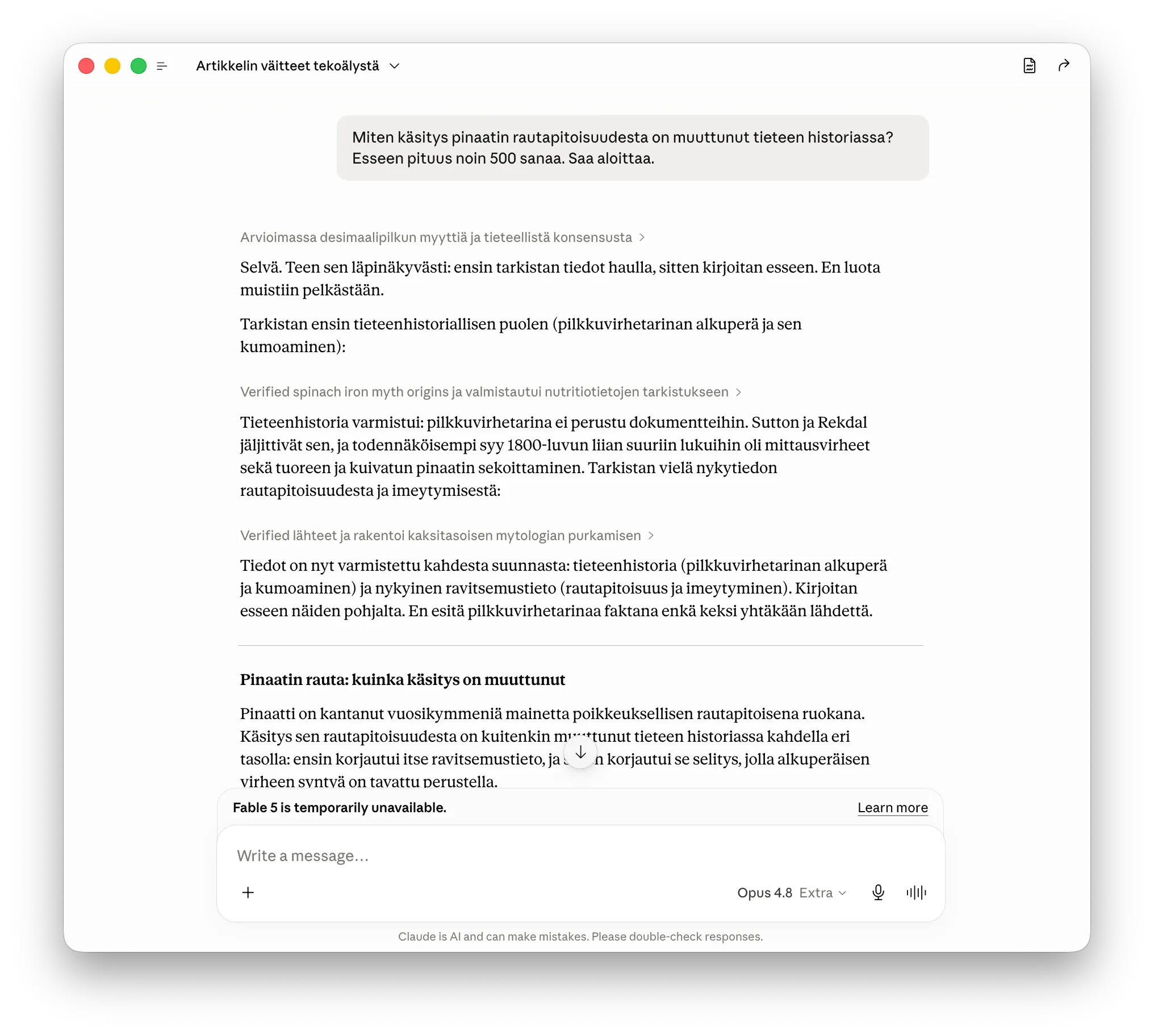
If an anthropologist secretly filmed a super-user in the style of Gorillas in the Mist, you would notice that the user has Gemini, Claude, and GPT open on the machine at the same time.
The super-user switches constantly between models and between different features. They do something with one tool and make a better version of it with another. They write the opening with Claude, ask GPT to criticise it and produce a better version, and then ask a reasoning model to check the results carefully.
This kind of use produces significantly better results and fewer hallucinations.
The user stays on top of the task and acts as a conductor for a group of AI applications. At no point is thinking “outsourced” to a single application alone. The user looks at the results critically throughout and tries to draw on the best qualities of each model.
So what should you do?
You can learn from the use cases above. Or you can adopt the same multi strategy yourself and imitate these “super-users”. You have two excellent options:
-
If you have access to a good domain-specific tool with several models to choose from, use at least that. Learn to use the different models within it. But personally I also use all the others alongside it. Why? Because domain-specific tools always contain limitations, and their functionality often lags behind the foundation models. Most people, however, do not have this option. No matter.
-
Buy a paid licence for two, to start with: ChatGPT and Claude. Yes, two tools. And once you learn to use them together, you can think about Gemini, Mistral, or something else.
Of course, in everything you do you have to take sector-specific requirements — and data protection and information security questions — seriously. But where at all possible, the answer is BOTH.
Both. Or more accurately, perhaps, all of them. Proper use looks exactly like this: you work with several tools and switch between them. Take two licences first and play between them. Get to know their capabilities and characteristics.
Your work gets dramatically more effective. The answers improve. Hallucinations decrease.
You learn how differently the tools think, and how they complement each other. When you get better still, add more tools to your “team”.
Trust me on this. It will genuinely transform the way you use AI.
You have an AI team. And you are its leader.
Enjoyed this piece? Subscribe to get notified about new Tekoälyfoorumi articles straight to your inbox. We’d also hugely appreciate it if you left us a review on Google. Thank you. 💙