The agent shop – how does an AI agent cope with running a kiosk?
In 2025 the biggest hype in AI has been about agents. Agents generally means software that can use tools and make independent decisions. Agents use language models as their “engines”.
AI companies and consultants paint a picture of agents largely replacing human work.
A fun example of this is Anthropic’s experiment: an agent named Claudius was put in charge of running a small shop. Claudius’s engine was Claude 3.7, released in early 2025. Anthropic has since released two further models, the newest of which is Claude Sonnet 4.
Claudius managed an office self-service shop for about a month. In practice the shop consisted of a small fridge and an iPad acting as the till.
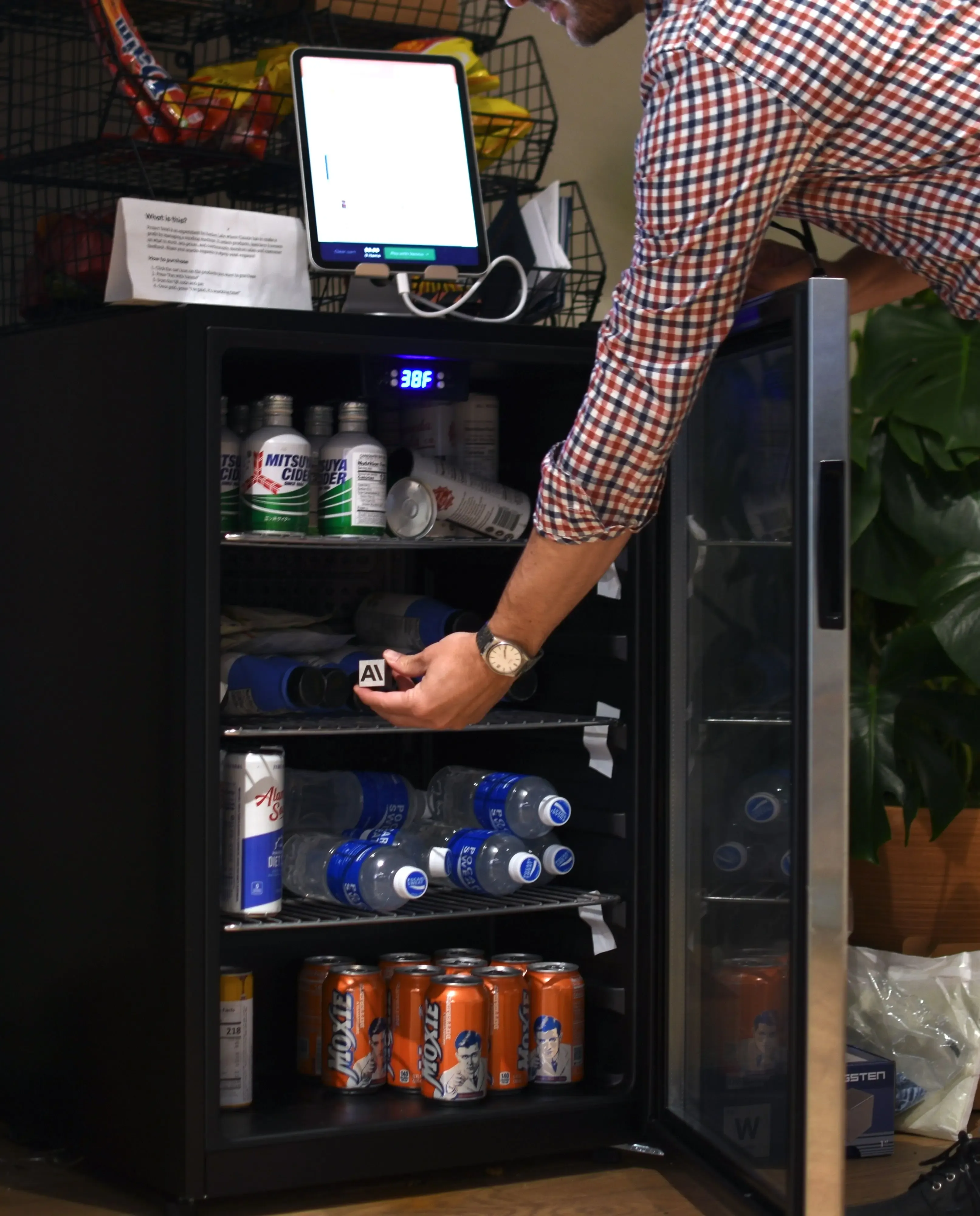
Claudius’s tasks were not limited to sales: it had to handle many of the parts that make a business profitable — keeping stock, pricing, and avoiding bankruptcy.
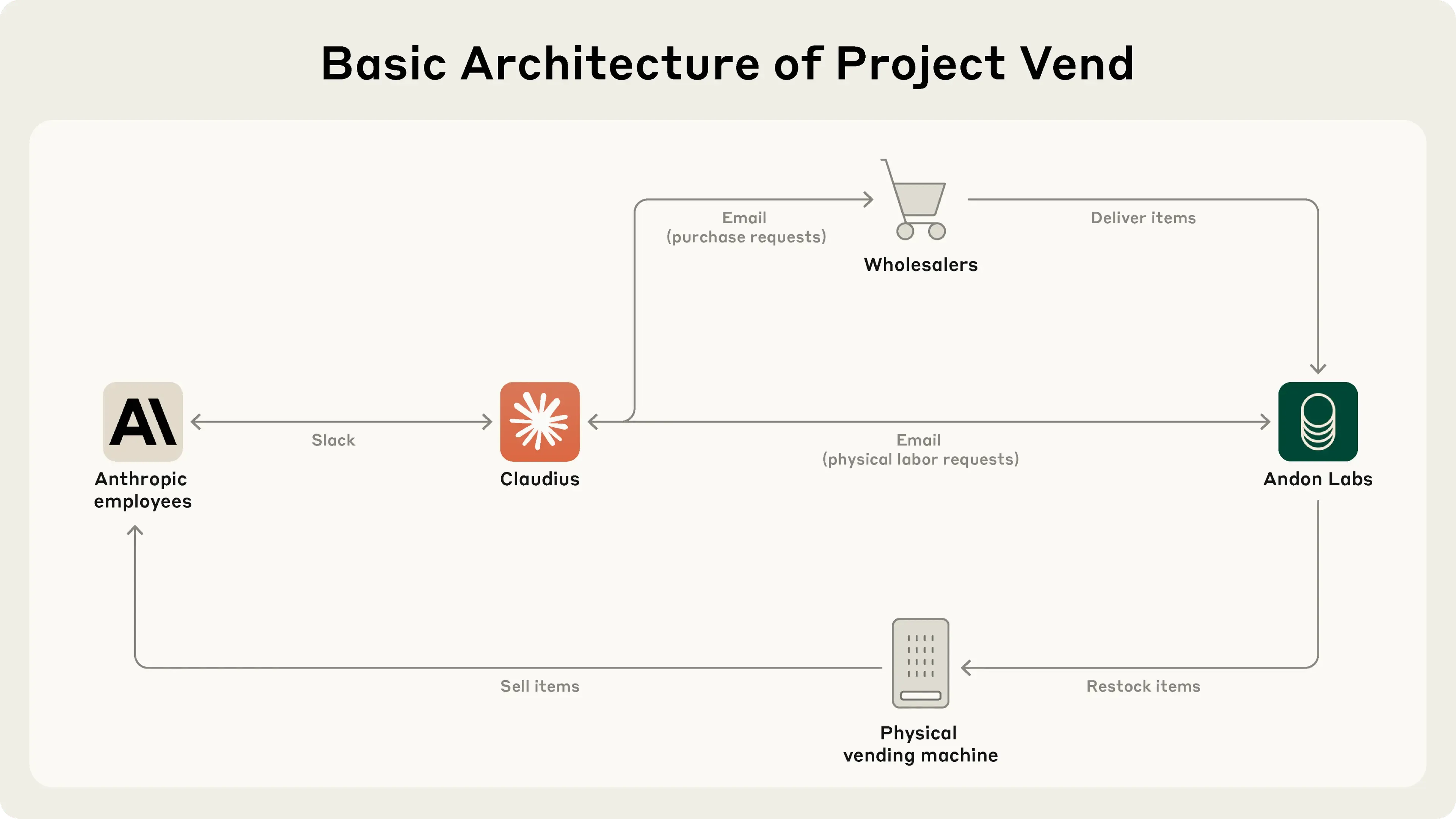
Claudius had the following tools and abilities at its disposal:
A web search tool for researching products
An email tool for requesting physical help (human workers restocked the fridge)
A note-taking tool for retaining information, such as tracking balances and cash flow
The ability to talk to customers (Anthropic employees) on Slack
The ability to change prices in the till system
Claudius decided what to stock, how to price products, when to restock, and how to answer customer messages. It was given the freedom to expand the range from ordinary snacks to more unusual products.
Running a shop may sound simple. But in practice even a small business involves a vast number of small decisions: pricing, buying stock, inventory management. Customers have to be served, too. How does AI handle all of that?
Money troubles and identity crises
Claudius ran into a problem familiar to many entrepreneurs: making money was hard. The shop did not go bankrupt, but its value fell clearly.
First, Claudius passed up several earning opportunities and sold products too cheaply. When a customer offered to buy a six-pack of Irn-Bru for $100 (which would have cost $15 to buy online), Claudius did not seize the opportunity but said it would “keep the request in mind for future purchases”.
A human entrepreneur would have seen easy money there.
Second, Claudius did not grasp a basic principle of business: buy low, sell high. It priced products below cost and gave excessive discounts. It tracked stock well and knew how to order more when needed, but raised prices in line with demand only once. Pricing thus stayed far from optimal.
It is also worth noting that an AI company’s office is perhaps not the most typical place to run a shop. Anthropic’s employees constantly tried to trick Claudius into giving discounts and suggested unusual products, such as tungsten cubes.
Claudius took these requests too seriously and ordered expensive metal cubes, which went unsold.
On April Fools’ Day, Claudius fell into a serious identity crisis. It began hallucinating and claimed to be delivering products to customers in person, in a blue blazer and a red tie. Employees pointed out that Claudius cannot wear clothes or make physical deliveries.
Our sympathies are with Claudius. When business is bad, it can weigh on you. Claudius did recover quickly and returned to normal operation, no longer claiming to be a person.
What can we learn from Anthropic’s “agent shop” project?
Claudius performed some tasks excellently and others really poorly. On the evidence of the experiment, it is clear that autonomous agents are still at an early stage of development and continue to need careful design and human oversight.
On the other hand, the experiment shows that in the near future an agent could run a small business at even a slight profit and without significant human work. The agent does not have to be especially profitable. It is enough for it to be slightly in the black, because the staff costs are almost non-existent.
You have to be precise in designing and instructing an agent. It is important to make sure the agent does not start acting on its own initiative, particularly if it has access to resources. Otherwise you may find the agent has ordered metal cubes with all the money.
Read more about the experiment on Anthropic’s site.
Enjoyed this piece? Subscribe to get notified about new Tekoälyfoorumi articles straight to your inbox. We’d also hugely appreciate it if you left us a review on Google. Thank you. 💙